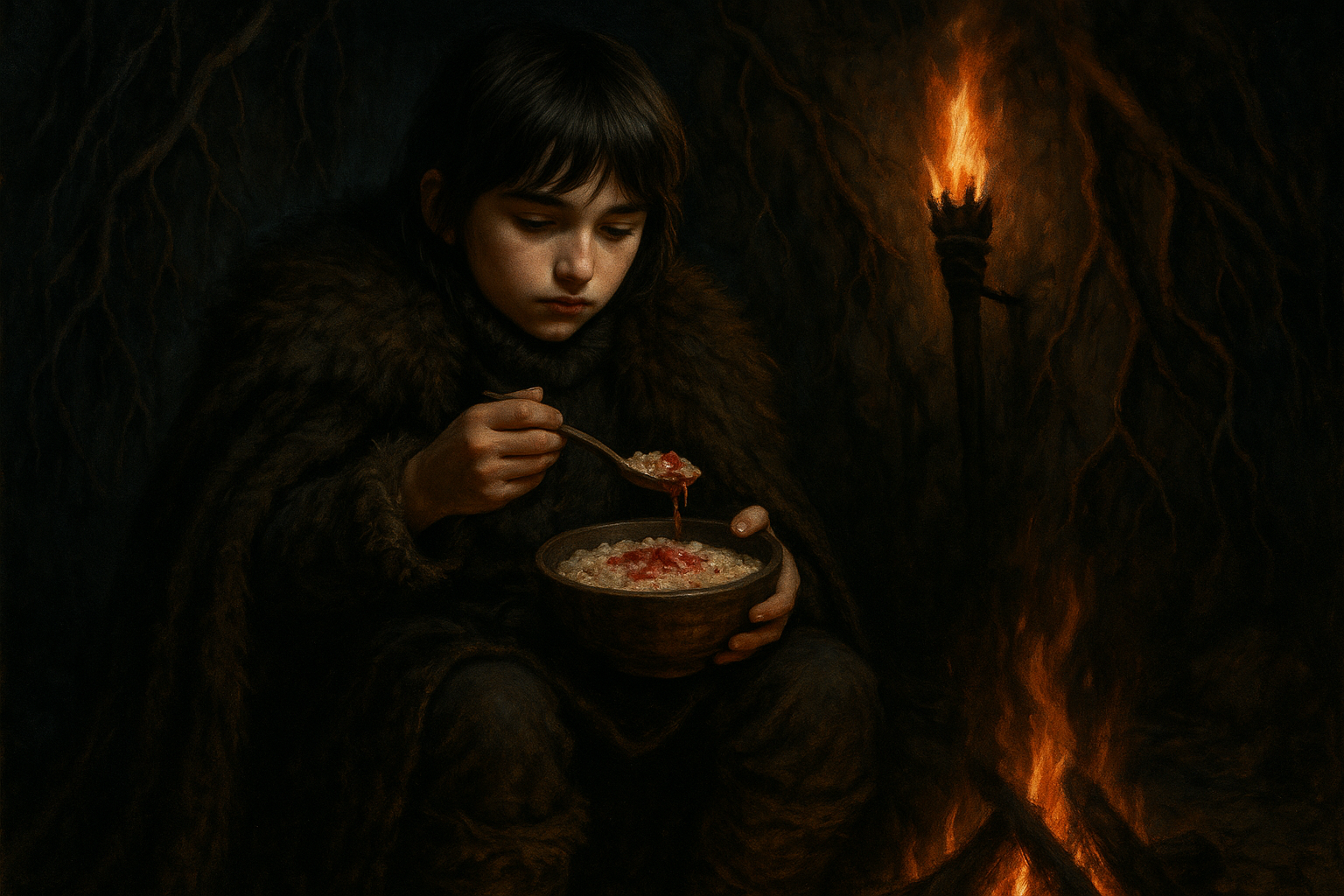
Bran’s last chapter detailing his initiation into finally entering the consciousness of the weirwood is one of my favourites. Readers are introduced to what appears to be a psychoactive substance, a paste of weirwood seeds intended to mediate the merger of his consciousness with that of the tree.
She had a weirwood bowl in her hands, carved with a dozen faces, like the ones the heart trees wore. Inside was a white paste, thick and heavy, with dark red veins running through it. “You must eat of this,” said Leaf. She handed Bran a wooden spoon. The boy looked at the bowl uncertainly. “What is it?” “A paste of weirwood seeds.”
— ADWD, Bran III
Though the scene is rather matter of fact and is not described in a ceremonial or ritual context, note how the bowl carved with weirwood faces, together with its unappealing looking contents, suggest an aura of the mystical. Bran must consume this concoction just before embarking on his first attempt at greenseeing. My aim is to offer a deeper understanding of various aspects of his journey toward greenseeing and ultimately, the transformative experience facilitated by the paste.
In this post, I examine the following:
- The significance of Bran’s warging ability
- The acorn-oak metaphor and its relation to the weirwood paste
- An interpretation of the sensations Bran experiences during the ritual
- The importance of joining with the weirwood specifically through its roots
Each stage prepares him for the ultimate act: entering the weirwood network.
I’ve already explored the role of breaking skinchanging taboos as part of the preparation for greenseeing in these previous posts:


Bran’s Inherent Warging Ability
Bran’s ability to warg into his direwolf, Summer, lays the foundation for his greenseeing powers. Though Bloodraven speaks to the rarity of skinchangers in general, “Only one man in a thousand is born a skinchanger,” I suspect that being born a warg in particular, meaning a skinchanger capable of bonding specifically with wolves, is a prerequisite to becoming a greenseer. I think it is unlikely that a skinchanger originally bonded to a different type of animal such as a bear, shadowcat, or boar could advance to the level of a greenseer.
Consider Haggon’s wisdom alongside Bloodraven’s explanation of why Bran needs to eat the weirwood paste:
“Wolves and women wed for life,” Haggon often said. “You take one, that’s a marriage. The wolf is part of you from that day on, and you’re part of him. Both of you will change.”
— ADWD, Prologue
“Your blood makes you a greenseer,” said Lord Brynden. “This will help awaken your gifts and wed you to the trees.” Bran did not want to be married to a tree …
— ADWD, Bran III
In the context of becoming a greenseer, this wolf-warg bond deserves deeper examination, not least because GRRM applies the “wedding” metaphor to both wolf and weirwood. Both unions are framed as marriages.
Haggon describes a lifelong relationship where warg and wolf become integral parts of each other, influencing and changing one another over time. This is no fleeting connection; it is a binding and permanent union of souls. We see proof of this unbreakable union when Varamyr loses control over his bear and shadowcat after suffering Melisandre’s magical attack and yet remains firmly bonded to his three wolves thereafter. Varamyr’s example demonstrates that the bond between warg and wolf cannot be severed, not even by soul-expelling fire magic. Perhaps another clue: Varamyr leaves us with the impression that the “wolf-brothers” in his circle of skinchangers occupy a class of their own.
As with the wolf-human relationship, the metaphor of “wedding to the tree” captures this idea of becoming irrevocably one with the weirwoods to form a binding spiritual contract. In short, it’s conceivable that such a metaphysical relationship can only be replicated by those who have previously experienced this kind of unbreakable psychic connection.
The broader implication of this wolf-weirwood-wedding parallel is that wolves, and/or wargs, possess something foundational that other skinchangers lack. If the greenseer’s union with the trees represents the culmination of spiritual merger and transformation (”Both of you will change”), then the wolf bond can be understood as its rehearsal.
To understand why the wolf serves as the necessary vessel for this kind of merging, we must look more closely at what defines the wolf itself.
The Nature of the Wolf
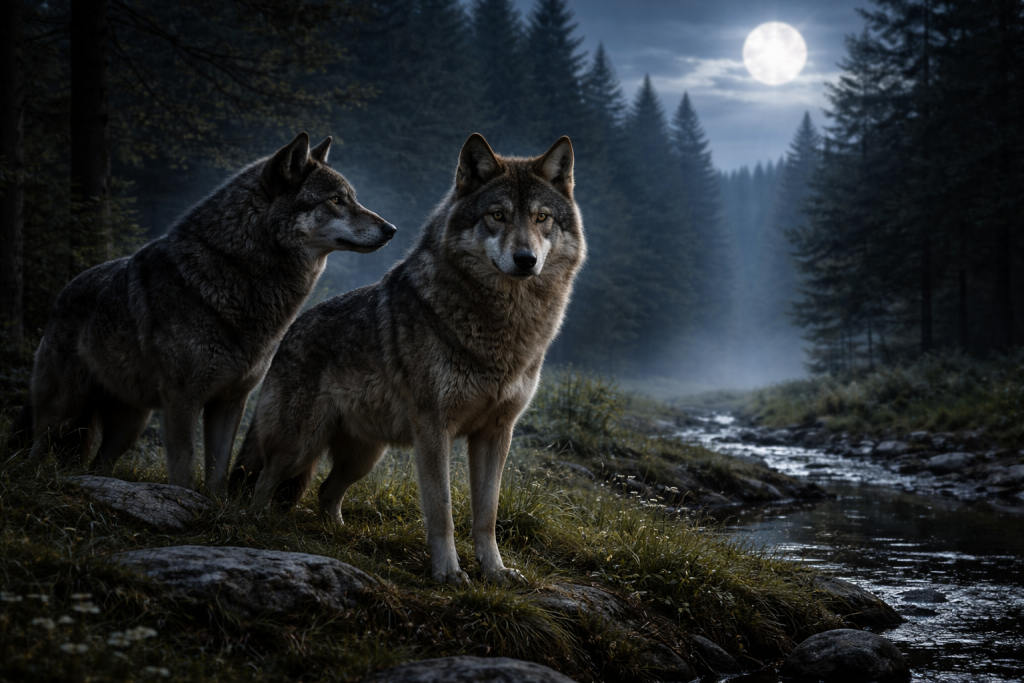
Wolves are social animals whose strength lies in their kinship structures. The pack is essentially an extension of the self, where each member is bound by cooperation, loyalty, and hierarchy. When a warg merges with a wolf, he isn’t merely borrowing a body; he’s joining a collective “pack-consciousness” rooted in blood and family belonging.
We see this quite literally in Bran. While inhabiting Summer, he can access other members of the wolf-family. He senses Lady’s and Greywind’s deaths and perceives the other direwolves, formerly a pack, now scattered. Bran himself thinks of his human family as his pack, as does Arya, who often recalls her father’s poignant words while lamenting the loss of hers:
“When the snows fall and the white winds blow, the lone wolf dies, but the pack survives.” She had no pack, though. They had killed her pack, Ser Ilyn and Ser Meryn and the queen, and when she tried to make a new one all of them ran off, Hot Pie and Gendry and Yoren and Lommy Greenhands, even Harwin, who had been her father’s man.
— AFFC, Arya II
In nature, loyalty, pack bonding, and intuition create a form of collective consciousness within the wolf pack. This is not telepathy exactly, but an instinctive merging of awareness through trust and shared purpose. Loyalty aligns individual will with the needs of the group; pack bonding transmits emotion and intent as though through one body; and intuition allows the pack to act as one without hesitation. We witness this when Shaggydog and Summer pick up on Bran’s anger toward Jojen and attack him in response.
The pack becomes something like a unified mind that remembers, senses, and acts collectively. Another vivid illustration of this is when Varamyr, warged into the lead wolf of his pack, experiences a kind of double awareness:
As he raced through the trees, his packmates followed hard on his heels. They had caught the scent as well. As he ran, he saw through their eyes too and glimpsed himself ahead.
— ADWD, Prologue
Here, the distinction between self and others partially collapses as Varamyr sees through his own wolf eyes as well as the eyes of his wolf-pack (just think of it: he sees through the eyes of multiple wolves!). This shared vision parallels the experience of looking through the eyes of a weirwood. Just as the warg sees through his pack, the greenseer sees through the trees.
The Inferiority of Other Skins
Varamyr’s recollections further illuminate why the wolf bond stands apart. Haggon warned against certain animals, insisting that “some skins you never want to wear, boy. You won’t like what you’d become.” He argues that each beast carries its own moral or spiritual “contagion,” negative qualities that eventually pass onto the human counterpart: cats are vain and cruel, prone to betrayal; elk and deer are prey and breed cowardice; bears and boars are fierce but solitary, and may dull the skinchanger’s intellect with brutish impulses. Birds, Haggon says, are the worst: “Men were not meant to leave the earth.”
If we interpret Haggon’s counsel, we find that every beast mirrors an aspect of human nature, and to bond with one too deeply is to surrender to its nature. Though the wolf also possesses an inherent “beast-nature,” it stands apart because of its defining social qualities, which serve as a foundation for collective consciousness.
In this light, the wolf is not merely Bran’s familiar animal; it is his teacher. Before one can be wed to the trees, one must first learn the language of the pack: a communion of minds bound to each other. The wolf’s purpose is to teach its bonded human how to belong to a collective mind: that, perhaps, is the first lesson to be learned, the true initiation every greenseer must undergo before becoming one with the weirwood.

The Acorn-Oak Metaphor and Weirwood Paste
At the beginning of Bran’s journey, Jojen Reed urges him to “open his third eye,” the psychic portal that will allow his spirit to slip its human form and merge with his direwolf, Summer. It is through Jojen that the acorn-oak metaphor first appears, directly tied to greenseeing:
“The crow gave you the third, but you will not open it.” He had a slow soft way of speaking. “With two eyes you see my face. With three you could see my heart. With two you can see that oak tree there. With three you could see the acorn the oak grew from and the stump that it will one day become. With two you see no further than your walls. With three you would gaze south to the Summer Sea and north beyond the Wall.”
— ACOK – Bran IV
This image captures the essence of greenseeing: the dissolution of linear time, where moments flow into one another until past, present, and future are perceived as one. The acorn, the oak, and the stump exist simultaneously within the same continuum of being. Perhaps this is akin to the concept of parallel universes – past, present, and future!
Bloodraven later echoes Jojen’s teaching, grounding it in the consciousness of the trees themselves:
“Time is different for a tree than for a man. Sun and soil and water, these are the things a weirwood understands, not days and years and centuries. For men, time is a river. We are trapped in its flow, hurtling from past to present, always in the same direction. The lives of trees are different. They root and grow and die in one place, and that river does not move them. The oak is the acorn, the acorn is the oak. And the weirwood … a thousand human years are a moment to a weirwood, and through such gates you and I may gaze into the past.”
— ADWD, Bran III
Together, these two teachings, Jojen’s metaphor and Bloodraven’s insights, form a complete cosmology. Greenseeing is a gift of total sight, where past, present, and future exist simultaneously within the living memory of the trees.
As we’ve seen, Bran’s bond with Summer is his first initiation into shared consciousness, preparing him for a second, deeper merging. This brings us to the paste of weirwood seeds which he must consume to move forward in his training, to embark on a new adventure, a ritual Bloodraven refers to as a wedding to the trees. This act extends the acorn-oak metaphor:
The acorn embodies dormant potential.
Within its shell lies the seed carrying the pattern of the oak it will become, awaiting the right soil and darkness to awaken it. Likewise, the weirwood seed contains the “pattern” as well as the memory and essence of the tree. When the children of the forest crush the seeds into paste, they activate that latent power, distilling it into a concentrated essence of the weirwood’s spirit. In analogy, Bran plants the tree within himself, allowing the spiritual connection between his soul and the weirwood network to take root. He becomes the soil in which the tree’s consciousness can grow.
Bloodraven’s words, “Your blood makes you a greenseer,” find their fulfillment here: blood is inheritance, but the seed is awakening. The ritual meal is both initiation and metamorphosis. One consequence of this is that Bran ceases to be bound by the human river of linear time and begins to root himself in the weirwood’s all-encompassing and boundary-crossing perception of it.
The Changing Taste of Weirwood Paste: Transformation in Real Time
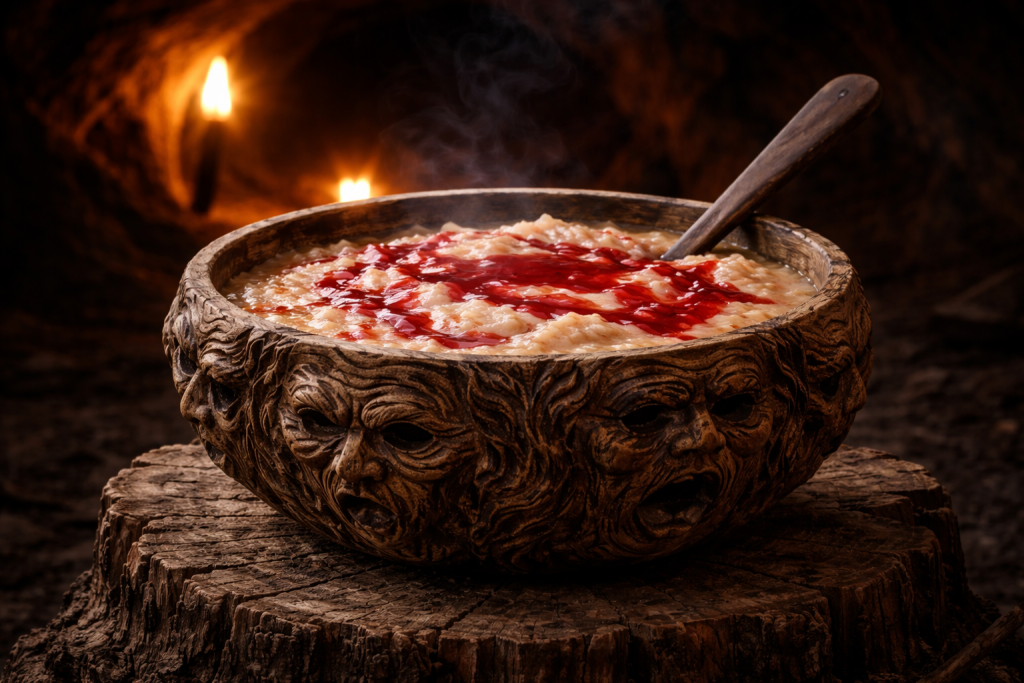
He ate. It had a bitter taste, though not so bitter as acorn paste. The first spoonful was the hardest to get down. He almost retched it right back up. The second tasted better. The third was almost sweet. The rest he spooned up eagerly. Why had he thought that it was bitter? It tasted of honey, of new-fallen snow, of pepper and cinnamon and the last kiss his mother ever gave him. The empty bowl slipped from his fingers and clattered on the cavern floor. “I don’t feel any different. What happens next?” Leaf touched his hand. “The trees will teach you. The trees remember.”
— ADWD, Bran III
Though Bran doesn’t feel any different after finishing the paste, the changing taste and emotions he experiences while eating indicate that a transformation is taking place. Each spoonful marks a stage of metamorphosis:
- First, the paste is bitter, representing resistance. Resistance is akin to the hard shell of the acorn, the ego clinging to the old self, the boundary that must be broken for new life to begin.
- With the next mouthfuls, the bitterness fades. Something within Bran begins to yield, giving way to sweetness, good memories, and emotion – his resistance softens. His experience mirrors the acorn’s transformation: the shell softens, splits, and gives way to new growth. The seeds germinate.
- By the final spoonful, the paste has become pleasant. What previously looked suspicious and tasted alien now carries the intimate flavor of home: honey, snow, spice, and the memory of love.
The changes he experiences during the course of eating signal his inner spiritual transformation, until at the end, the magic takes hold. It’s not just paste; it becomes a key, unlocking the spiritual door within Bran, rooting him in the same magical ecosystem as the weirwoods. The “wedding” has taken place, creating a living, mystical bond that enables skinchanging into the tree and gaining access to its ancient consciousness.
Memory Embedded in the Roots of the Weirwood
Why is Bran instructed to enter the weirwood through its roots?
“Slip your skin, as you do when you join with Summer. But this time, go into the roots instead. Follow them up through the earth, to the trees upon the hill, and tell me what you see.”
— A Dance with Dragons, Bran I
The text is explicit: Bran’s access point to the tree’s consciousness is not through its leaves, bark, or carved face, but through the roots. This detail suggests that the roots serve as the true conduit between the human mind/spirit and the weirwood’s vast, subterranean memory. The connection flows upward from below, not downward from above, an inversion of the usual divine hierarchy, emphasizing that greenseer power is drawn from the chthonic, not the celestial.
This is reinforced by Bloodraven’s teachings:
“Never fear the darkness, Bran.” The lord’s words were accompanied by a faint rustling of wood and leaf, a slight twisting of his head. “The strongest trees are rooted in the dark places of the earth. Darkness will be your cloak, your shield, your mother’s milk. Darkness will make you strong.”
— A Dance with Dragons, Bran III
This citation offers our first textual clue that the roots are the seat of memory and spiritual transmission. Indeed, if weirwoods share a physical or magical network, the roots are the most plausible mechanism. In nature, leaves fall and decay, bark peels away and branches break, but roots do endure. They can persist underground for centuries or even millennia, interlacing with the soil and the roots of neighboring trees. Biologically, roots function not only as systems for nutrient uptake but as hubs of communication. These functions are aided by underground pathways of symbiotic mycorrhizal fungi through which they exchange nutrients and warnings. In this sense, the roots can be understood as a kind of neural network, a living network of connection and ultimately of perception and memory.
Symbolically, roots represent origins, ancestry, and the unseen foundations of being, akin to memory hidden within the subconscious. Mythology mirrors this truth. In Norse cosmology, the roots of Yggdrasil reach into Mímisbrunnr, the Well of Wisdom, from which Odin drinks to gain knowledge at the cost of an eye. Similarly, the roots of the Bodhi Tree symbolize the grounding and stability that allowed the Buddha to meditate deeply and achieve spiritual enlightenment.
Bran’s entry through the roots enacts a symbolic descent into the underworld, an initiation mirrored across the above-mentioned mythic traditions. Additionally, the roots, reaching deep into the earth, mark a threshold between death and life. This connection to death is emphasized by the burial customs of some followers of the old gods, who often lay their dead to rest beneath the heart tree, placing them within the weirwood’s reach. The deceased are thus returned to the seat of ancestral memory, back to the roots, ensuring their presence endures within the weirwood’s awareness. Death, in this context, is neither final nor separate but a form of remembrance, the body’s return to the earth enabling the continuity of spirit and history through the trees.
Weirwood magic, then, is profoundly chthonic: born of earth, sustained by darkness, and rooted in death. Even Bloodraven’s cave, strewn with the bones of beasts and men, suggests that greenseer magic draws strength from decay as much as from life. We can conclude that Bran’s path to greenseeing therefore leads through darkness before revelation, and he must descend into the roots to tap into that consciousness before rising to witness.

Conclusion: The Willing Groom
When Leaf first presented Bran with that weirwood bowl, carved with its dozen faces and filled with thick white paste veined with red, Bran’s reaction was one of uncertainty. He did not want to be married to a tree. Yet by the time the bowl clattered empty to the cavern floor, the wedding was complete. The paste that had tasted bitter at first had become honey and snow and his mother’s last kiss. Resistance had given way to union.
This transformation, from reluctant boy to willing greenseer, mirrors the larger pattern of Bran’s journey. He did not choose the destiny that awaited him. Yet at each turn, what seemed like loss became the condition for something greater. His broken body opened the door to his gifts and his exile led him to his destiny.
The double wedding, first to wolf and then to tree, represents two stages of surrendering the self. Through Summer, Bran learned that consciousness need not be confined to a single body, that minds can merge and see through multiple eyes at once. Through the weirwood, he learned that consciousness need not be confined to a single moment in time, that past and present can exist simultaneously in the living memory of the trees.
What role this transformation prepares Bran for in the wars to come remains to be seen. A greenseer can witness the past through the eyes of the weirwoods, but whether he can influence it, or speak across the centuries, or shape events yet unfolding, the text has only begun to suggest. What we do know is that Bran has completed a profound double initiation: first the lifelong bond with Summer, then the wedding to the weirwood through its paste and roots.
The paste has done its work. The wedding is complete. And like the acorn that contains the pattern of the oak it will become, Bran carries within him the shape of something we cannot yet fully see. As Leaf advises him: “The trees will teach you. The trees remember.” And through Bran, perhaps, the trees will act.
All images are AI-Generated